In Damme, plans for Kwartier 51 have officially been unveiled: an ambitious and sustainable redevelopment of the former military site in Sijsele. “What has been a closed-off area for years is becoming an open, forward-looking district,” says Mayor Joachim Coens. Alongside WVI and developers Ciril‑Brocap, the city is creating a vibrant, multifunctional neighbourhood on this exceptional 20.5-hectare location. Construction is scheduled to begin in 2027, with full development staged until 2037.
The former Sergeant Baron Gillès de Pélichy barracks on Dorpsstraat will be transformed into a mixed-use urban district blending living, working, leisure, and community activities. The public-private partnership, consisting of Ciril and Brocap, will design, finance, and build the project, which includes both private and publicly accessible spaces.
A diverse living environment
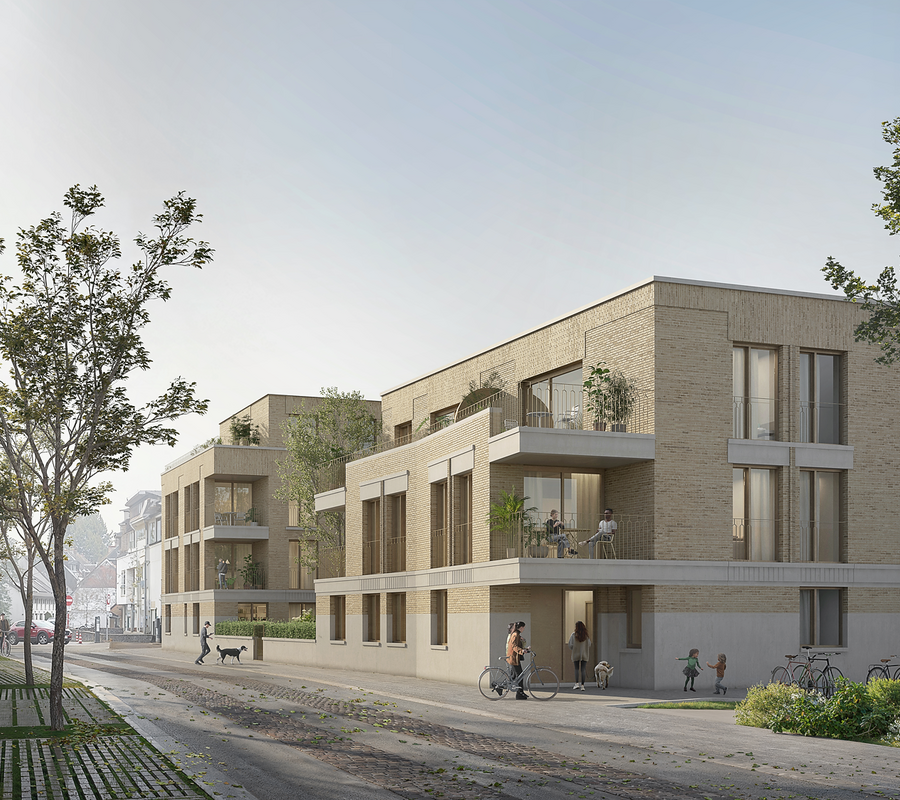
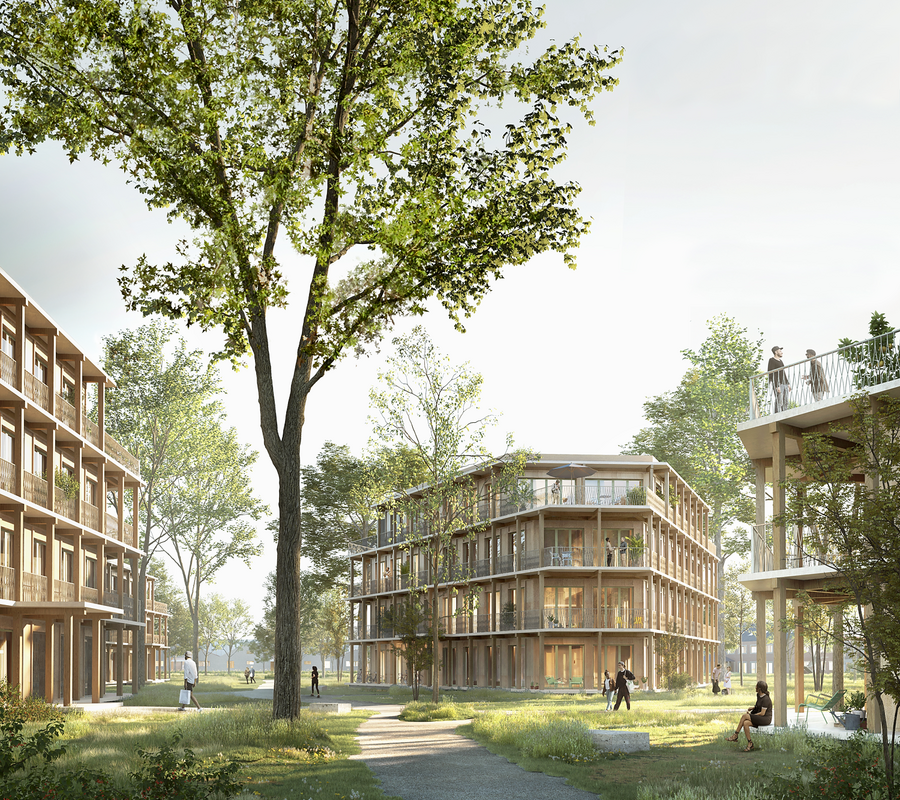
Kwartier 51 will feature 225 residential units designed for a wide range of ages and family configurations—from individuals and starters to large blended families. Beyond housing, the plans include space for local businesses, a youth activity centre, and an events hall. “A large portion of the site will be public space: a park with a water feature, natural play areas, sports facilities, walking and cycling paths, and woodland. Initiatives like ‘Damme Beach’ and temporary events in the existing halls will still be possible during phased development,” assures Mayor Coens.
“It’s not just about building, but about connecting functions and people. Kwartier 51 won’t be a conventional residential subdivision,” says Iris Bauwens, project manager at Brocap. “Public space plays a key role: linking zones within the site, and linking the site with the village. This interweaving creates a neighbourhood that lives, where entrepreneurship thrives, and where community life has a place. We believe this socio-economic fabric is essential for sustainable growth.”
Extending the village
“After decades of limited activity, the site becomes a natural extension of Sijsele’s centre,” adds Mayor Coens. “With Kwartier 51, we open the centre towards the former barracks site and further into the woodland of Ryckevelde. We’re creating a neighbourhood that truly belongs to the village and is ready for the future. In addition to housing, we’re also providing space for local businesses, including a hospitality venue in the site’s villa. We’ll issue the concession call this summer.”
Sustainable and thoughtful
The site is being designed as a neighbourhood that can grow and adapt with its inhabitants and the times. Existing halls, staff buildings, and troop quarters will be reused wherever possible. New buildings will be flexible and sustainable, with a focus on circular materials, shared energy solutions, and soft mobility.
“We build wisely for the future, based on the site’s strengths,” says Werner Wouters, head of project development at Ciril. “Regenerative development for us means creating a neighbourhood that strengthens itself and adapts to changing needs without losing its qualities. For example, the central avenue will be restored as a green backbone linking the village core to Ryckevelde woods. In the southwest, a new over-two-hectare forest will form a natural buffer and biodiversity-rich area.”
A strong team
Developers Ciril and Brocap contribute their long-standing experience in sustainable urban redevelopment and adaptive reuse. They worked together previously on several major projects.
For this ambitious project, they’re partnering with renowned firms like architects a2o, AWG, and B2Ai; urban and landscape bureau Atelier Romain alongside infrastructure and sustainability specialists Bureau Cnockaert; and sustainability experts GRUUND.
“Ciril‑Brocap presented a strong and realistic vision,” says Geert Sanders, CEO of WVI. “Together with WVI and the city, it was refined into a carefully considered sustainable plan that stands out in quality, feasibility, and climate-friendliness. The combination of scale, mix of uses, location, history, and character forms the basis for a contemporary area development unique in Flanders.”
Phased delivery with public participation
Implementation will be phased through to 2037. After preparatory studies and securing permits, infrastructure works will begin in 2027—renewing roads and underground services first. If all goes to plan, the first homes, halls, and public areas will be delivered in 2029.
This phased approach allows adjustments when needed and emphasizes active engagement with residents, a priority for the developer team. A first information session for residents and interested parties is scheduled for the fair weekend on 27 September, when the developer will present detailed plans and address questions from locals, entrepreneurs, and other stakeholders.
Anyone wanting to follow the project closely can register via www.kwartier51.be.